Executive Summary: Autumn in Wisconsin brings rapid temperature swings, wet road debris, and early morning frosts that place severe mechanical stress on vehicle batteries, tires, and brake assemblies. Performing a multi-point seasonal inspection before sub-freezing weather sets in prevents sudden roadside breakdowns, preserves engine life, and safeguards stopping power. Drivers searching for reliable auto repair near Kenosha, Wisconsin can protect their investment and ensure road safety by following this comprehensive fall maintenance guide.
Driving along Lake Michigan during autumn means navigating wet fallen leaves, sudden temperature plunges, and dense morning fog. When road conditions shift rapidly, small underlying automotive issues quickly turn into dangerous driving hazards and costly emergency repairs. A proactive seasonal tune-up ensures every major vehicle component is ready to handle cold morning starts and slick pavement.
📌 Key Takeaways (TL;DR)
- Battery Output Drops in Cold Weather: Low temperatures reduce battery cranking capacity by up to 30%, making early computerized load testing necessary to avoid sudden morning failure.
- Stopping Distance Expands on Slick Autumn Roads: Wet leaves reduce traction significantly, demanding a thorough check of brake pads, rotors, and fluid condition.
- Preventative Fluid Flushes Save Transmissions and Engines: Inspecting antifreeze freeze points, motor oil viscosity, and brake moisture content protects vital mechanical parts from winter stress.
🔎 Key Questions Answered
What is the most important fall car maintenance task in Wisconsin?
Testing the battery and charging system under load. Cold temperatures reduce chemical battery efficiency while engines require substantially more electrical power to crank cold, thick oil.
How often should tire pressure be checked as autumn temperatures drop?
Tire pressure should be inspected at least once every two weeks when cold. For every 10-degree drop in ambient temperature, tire inflation drops approximately 1 to 2 PSI.
Why do brakes feel spongy or squeak during autumn?
High humidity, overnight frost, and road debris cause surface rust on rotors, while moisture-contaminated brake fluid degrades pedal firmness under heavy braking.
Why Autumn Weather Tests Vehicle Reliability in Southeastern Wisconsin
The transition from mild late-summer warmth to bitter autumn frost exposes weak spots in every automotive system. In Kenosha, WI, coastal humidity from Lake Michigan combines with falling temperatures to accelerate corrosion and degrade rubber components. When drivers delay seasonal maintenance, minor wear turns into unexpected breakdowns during morning commutes.
Automotive components expand and contract with temperature shifts. Rubber serpentine belts harden, wiper blade squeegees tear, and weak car batteries lose their ability to deliver required cranking amps. Research into essential seasonal maintenance practices indicates that most winter roadside failures originate from neglected fall upkeep.
The Rise of Preventative Vehicle Care in Wisconsin’s Salt Belt
Over the past decade, automotive technology has advanced with direct-injection engines, sophisticated electronic stability systems, and computer-controlled transmissions. While these modern platforms deliver greater fuel economy and passenger safety, they also demand tighter operating tolerances. In the Upper Midwest salt belt, preventative maintenance is no longer just about changing engine oil; it is about protecting complex electrical networks, sensor arrays, and hydraulic brake controls from premature wear.
Drivers who practice seasonal vehicle conditioning experience fewer catastrophic engine failures and retain significantly higher resale value. Addressing brake pad thickness, suspension bushings, and coolant freeze thresholds in October avoids expensive repair bills in January when shops are backlogged with emergency towing calls.
Fall Car Maintenance in Practice: The 6 Core Systems Inspection
A complete seasonal checkup evaluates mechanical, electrical, and hydraulic systems to ensure maximum road readiness. Review these six key inspection areas before the first frost arrives in Kenosha.
1. Battery and Electrical Charging System Under Load
Summer heat breaks down internal battery plates, evaporating electrolyte liquid and creating internal corrosion. When autumn arrives and temperatures drop near freezing, the weakened battery struggles to turn over the starter motor. A professional digital load test measures cold cranking amps (CCA), internal resistance, and alternator charging output.
| Component | Inspection Threshold | Recommended Action |
|---|---|---|
| Battery Age | 3 to 5 years old | Conduct load test; replace if CCA is under 70% rating |
| Battery Terminals | White or blue corrosion buildup | Clean with neutralizing spray, tighten cables, apply protective grease |
| Alternator Output | Voltage output below 13.8V or above 14.8V | Diagnose voltage regulator and charging diodes |
2. Braking System Response on Wet Leaves and Black Ice
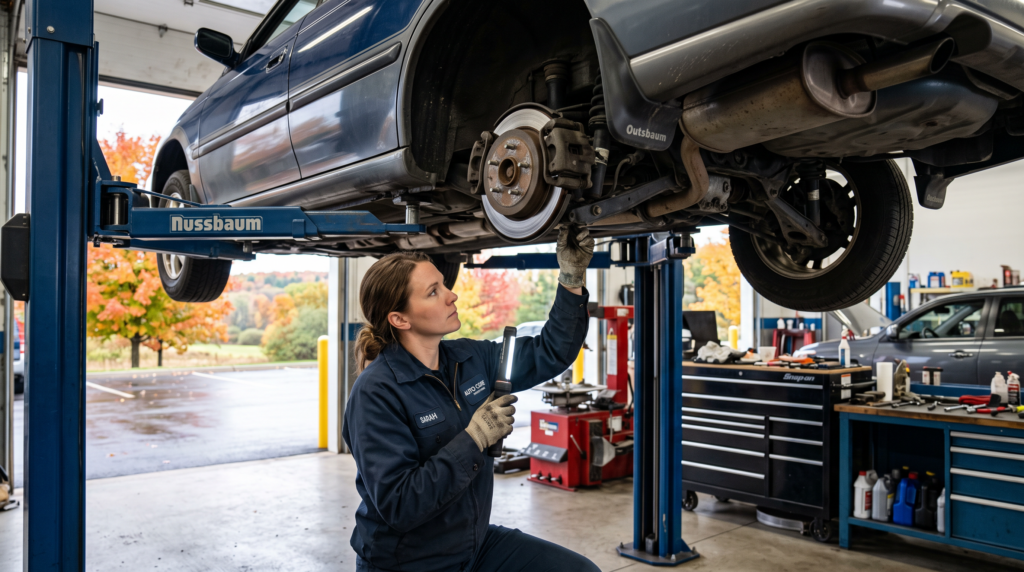
Wet asphalt covered with decaying leaves has a friction coefficient similar to driving on packed snow. When stopping abruptly on Kenosha roadways, your vehicle relies heavily on balanced friction between brake pads and smooth rotors. If you hear squealing, feel a pulsating brake pedal, or notice increased travel before the brakes engage, an immediate professional brake service inspection is necessary.
- Pad Thickness: Friction material must be measured across both inner and outer pads. Replace pads if thickness drops below 4/32 inch (3mm).
- Rotor Surface Condition: Inspect discs for deep grooves, heat scoring, and rust lips along outer edges that cause uneven pad wear.
- Brake Fluid Moisture Level: Brake fluid is hygroscopic and absorbs ambient humidity over time. Water contamination lowers the boiling point and creates internal line corrosion. Flushes are recommended every 2 years.
3. Tire Tread Depth and Cold Weather Pressure Shifts
Tires are the single physical link between your vehicle and the roadway. Cold ambient air causes air molecules to condense, leading to an immediate drop in tire pressure. Driving on underinflated tires accelerates shoulder tread wear, lowers fuel mileage, and compromises steering responsiveness.
Inspect tread depth across the center and shoulder grooves using the quarter test. Place a Washington quarter upside down into the tread. If the top of Washington’s head is completely visible, the tire has less than 4/32 inch of tread remaining and cannot channel slush or water effectively, drastically increasing hydroplaning risks.
4. Cooling System Protection and Antifreeze Concentration
Engine coolant serves a dual purpose: it prevents engine overheating during summer and stops the engine block from freezing and cracking during Wisconsin winters. Over multiple seasons, corrosion inhibitors in the coolant break down, turning the mixture acidic.
Using a refractometer or hydrometer, check the antifreeze freeze point protection. In Southeastern Wisconsin, cooling systems should be rated to protect down to -34 degrees Fahrenheit (-36 degrees Celsius). Technicians also check radiator hoses for softness, cracking, or swelling near connection clamps.
5. Visibility, Wiper Blades, and Cold-Weather Washer Fluid
Shorter autumn daylight hours and frequent rain showers make optical clarity on the windshield essential for driver safety. Summer sun degrades rubber wiper blades, causing streaking, chattering, and blind spots across the glass.
- Wiper Replacement: Install fresh beam-style wiper blades designed to resist ice buildup and maintain even windshield contact.
- Winter Washer Fluid: Drain leftover summer bug wash and fill the reservoir with a winter-blend washer fluid rated to -20 degrees Fahrenheit to prevent line freezing.
- Headlight Lens Clarity: Polish foggy or oxidized headlight assemblies to restore full beam illumination for night driving.
6. Engine Oil Viscosity and Essential Fluid Condition
As outdoor temperatures drop, standard motor oil thickens, slowing oil circulation to upper valvetrain components during a cold start. Using the vehicle manufacturer’s recommended multi-grade synthetic oil (such as 0W-20 or 5W-30) provides rapid lubrication protection immediately upon turning the ignition key. Regular oil changes remove accumulated sludge, metal particles, and combustion contaminants.
Tailored Solutions for Different Driving Needs in Kenosha County
Every driver puts different demands on their vehicle based on daily mileage, cargo payload, and commute routes. Structuring your seasonal vehicle maintenance plan around specific driving habits ensures peak reliability without unnecessary expense.
Custom Maintenance Priorities by Driver Profile:
- Daily Highway Commuters (I-94 Corridor): Prioritize wheel alignment, high-speed tire balancing, aerodynamic wiper blades, and synthetic transmission fluid checks to handle sustained speeds.
- Local Stop-and-Go Drivers: Focus on battery charging health, brake caliper slide lubrication, and frequent engine oil intervals to counter the moisture buildup common in short trips.
- Commercial Fleets and Work Trucks: Emphasize heavy-duty suspension bushings, ball joints, differential fluid changes, and high-output alternator tests to support payload demands.
- High-Mileage Vehicles (100k+ Miles): Inspect serpentine accessory belts, water pump weep holes, radiator hoses, and valve cover gaskets for cold-weather seepage.
Why Kenosha Drivers Trust Moreno Auto Service & Repair
When searching for dependable auto repair near Kenosha, Wisconsin, vehicle owners need a local mechanic shop they can rely on for honest evaluations, clear explanations, and precise mechanical work. Located at 3102 22nd Avenue in Kenosha, WI, Moreno Auto Service & Repair is a family-owned and operated repair facility dedicated to keeping local vehicles running safely and smoothly.
Led by Rodrigo and a team of experienced technicians, the shop takes the time to diagnose the root cause of mechanical problems rather than simply replacing parts. With transparent pricing, five-star customer reviews, and a welcoming environment, Moreno Auto Service & Repair provides complete auto care ranging from computerized engine diagnostics and brake service to suspension overhauls and seasonal fluid changes.
Frequently Asked Questions About Fall Auto Maintenance in Kenosha, WI
When is the best time to perform fall car maintenance in Wisconsin?
The ideal window for fall maintenance is late September through October before freezing temperatures arrive. Scheduling inspections early gives drivers time to address worn brakes, aging batteries, or tire replacements before snow and icy weather hit.
Can I use all-season tires through a Wisconsin winter?
All-season tires with at least 5/32-inch tread depth perform adequately in light snow and cool rain. Drivers frequently commuting on unplowed county roads or icy highway stretches benefit from switching to dedicated winter tires with specialized cold-weather rubber compounds.
How do cold temperatures affect my tire pressure warning light (TPMS)?
Cold air causes tire pressure to drop by 1 to 2 PSI for every 10-degree decrease in temperature. A sudden autumn cold snap can trigger the dashboard TPMS indicator light, requiring manual pressure adjustment to manufacturer specifications.
What should I include in an autumn vehicle emergency kit?
A reliable seasonal kit should contain heavy-duty jumper cables, a tire pressure gauge, a portable flashlight, an ice scraper and snow brush, warm gloves, a thermal blanket, and a basic first-aid kit.
Protect Your Vehicle Before the First Freeze
Taking care of seasonal car maintenance now saves you from costly emergency repairs and stressful roadside strandings later this season. From comprehensive brake inspections and battery load tests to full fluid exchanges, the skilled technicians at Moreno Auto Service & Repair are ready to keep your car operating at its best.
Visit Moreno Auto Service & Repair at 3102 22nd Ave, Kenosha, WI 53140 or call 262-842-7041 today. You can also easily schedule your appointment online to ensure your vehicle is fully prepared for all Wisconsin road conditions.