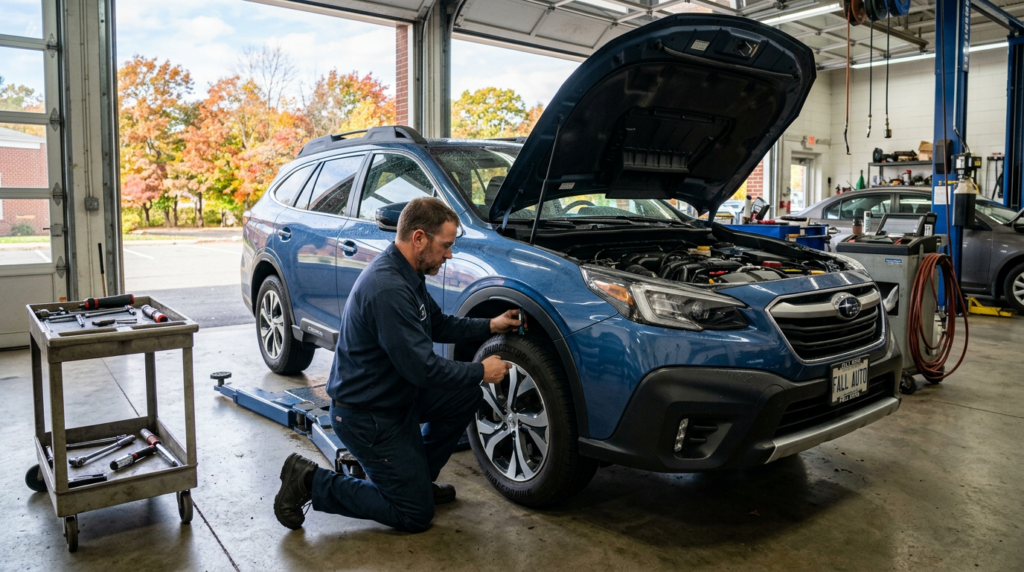
As summer fades and crisp autumn air settles across Southeast Wisconsin, vehicle demands shift rapidly. Cooler morning temperatures, slick fallen leaves, and upcoming freezing weather place significant stress on your car’s critical mechanical systems. Scheduling timely auto repair near Kenosha, Wisconsin ensures that your brakes, battery, tires, and cooling systems operate safely before the harsh winter season arrives.
Key Takeaways: Quick Fall Prep Summary
- Battery Health: Sub-freezing temperatures reduce battery output by roughly 30%—inspecting terminals and voltage now prevents sudden no-start mornings.
- Tire Pressure & Tread: Tire pressure drops roughly 1 PSI for every 10-degree drop in outside temperature; proper tread ensures traction on wet autumn leaves and slush.
- Brake System & Fluids: Moisture in brake lines or degraded antifreeze can cause catastrophic cold-weather failures if left unserviced.
Key Question: Why is fall the ideal time for seasonal vehicle service?
Autumn maintenance catches summer heat wear and tear early, preparing vital fluids, electrical components, and braking systems to withstand sub-freezing Midwest temperatures reliably.
The Importance of Seasonal Automotive Care in the Midwest
Wisconsin driving conditions are notoriously demanding on passenger cars, SUVs, and light trucks. High summer heat evaporates battery fluid and weakens rubber components, while sudden autumn temperature swings accelerate tire deflation and fluid breakdown. According to automotive safety guidelines outlined in the comprehensive seasonal checklist, proactive inspections before freezing weather hits eliminate up to 80% of preventable winter roadside breakdowns.
Taking care of minor issues during autumn prevents emergency repairs when snow and ice cover local roadways across Kenosha County.
Essential Fall Car Inspection Checklist
A thorough pre-winter vehicle checkup covers several interconnected components that directly affect performance and safety:
1. Battery Output and Electrical Charging System
Summer heat degrades battery plates and accelerates corrosion around terminals. As ambient temperatures decrease, cold engine oil requires significantly more cranking power to start. Testing voltage output and cleaning corroded terminals ensures reliable ignition every single morning.
2. Tire Tread Depth and Cold-Inflation Pressure
Because tire pressure decreases as the air contracts in cooler weather, checking inflation levels monthly is vital. Furthermore, wet autumn leaves create a driving surface as slick as ice. Inspecting tread depth ensures adequate channeling of water, slush, and debris away from the contact patch.
3. Brake Pad Thickness and Hydraulic Fluid Condition
Braking distances increase substantially on damp, cold pavement. Ensuring brake pads possess adequate friction material and that brake fluid remains free of moisture prevents pedal fade and uneven stopping.
4. Antifreeze and Engine Cooling System Protection
Coolant does more than prevent overheating during hot summer drives—it prevents engine block freeze-ups during sub-zero Wisconsin winters. A 50/50 mix of fresh antifreeze and distilled water keeps the engine operating at optimal thermal efficiency.
5. Wiper Blades, Defrosters, and Lighting
Shorter daylight hours demand crisp exterior illumination and streak-free visibility. Replacing torn wiper blades and topping off freeze-resistant washer fluid ensures clear sightlines during heavy rain or early frost.
Preventative Automotive Maintenance in Practice
Understanding how routine automotive care saves time and money is essential for vehicle longevity:
- Preventative vs. Reactive Repairs: Replacing worn brake pads early costs a fraction of replacing warped rotors and seized calipers later.
- Fuel Efficiency Retention: Properly inflated tires and fresh motor oil reduce engine drag, saving noticeable fuel costs during cold-weather commuting.
- Preserving Resale Value: Documented maintenance records protect long-term vehicle equity and mechanical dependability.
| System Component | Inspection Frequency | Typical Warning Signs |
|---|---|---|
| Car Battery | Twice yearly (Fall & Spring) | Slow engine crank, clicking sounds, dim headlights |
| Brake System | Every 6 months / tire rotation | Squeaking, grinding, spongy pedal feel |
| Tires & Alignment | Monthly pressure, rotate every 6k miles | TPMS warning light, uneven wear, steering pull |
| Engine Coolant | Annual test / milestone service | Temperature spikes, sweet smell in cabin, fluid leaks |
Tailored Solutions for Every Driver
Vehicle maintenance requirements vary depending on how and where you drive across Kenosha and surrounding communities:
- Daily Highway Commuters: Prioritize tire tread balance, suspension alignment, and fresh synthetic motor oil for high-mileage dependability.
- Short-Trip City Drivers: Focus on battery testing and exhaust condensation prevention, as short trips prevent the engine from reaching full operating temperature.
- Older Model Vehicles: Inspect aging rubber hoses, serpentine belts, and suspension bushings that become brittle in cold temperatures.
Why Choose Moreno Auto Service & Repair in Kenosha, WI
When searching for reliable, family-owned auto repair in Kenosha, Moreno Auto Service & Repair delivers trusted, transparent, and experienced automotive care. Located at 3102 22nd Avenue, the dedicated team provides honest diagnostics, fair pricing, and expert craftsmanship across all makes and models.
From brake inspections and computer diagnostics to routine fluid flushes, Moreno Auto Service & Repair ensures your vehicle remains dependable all year round.
Frequently Asked Questions About Fall Car Maintenance
How often should I check my tire pressure during autumn?
You should check tire pressure at least once every month and before any long road trips. Because tire pressure drops approximately 1 PSI for every 10°F drop in outdoor temperature, seasonal cooling causes unexpected under-inflation.
How do I know if my car battery will survive the winter?
A standard voltage meter test or professional battery load test reveals whether your battery holds sufficient charge. Batteries older than 3 to 4 years should be tested every fall to prevent sudden failure.
Should I switch to synthetic oil before winter?
Full synthetic oil flows much smoother at cold temperatures compared to conventional oil, reducing engine friction during freezing morning startups. Check your owner’s manual or consult your local technician for manufacturer recommendations.
When should wiper blades be replaced?
Wiper blades should generally be replaced every 6 to 12 months, or as soon as you notice streaking, chattering, or visible cracking on the rubber squeegee.
Prepare Your Vehicle for Winter Driving Today
Don’t wait for the first winter storm to discover a weak battery or worn brakes. Ensure your vehicle stays safe and dependable on Wisconsin roads. Visit Moreno Auto Service & Repair in Kenosha, WI for complete seasonal maintenance, honest service, and peace of mind.