Executive Summary: Autumn in Southeast Wisconsin brings crisp air and changing leaves, but it also signals the urgent need to inspect your vehicle before freezing temperatures and heavy road salt take their toll. Scheduling comprehensive auto repair in Kenosha WI during the fall helps identify worn brake pads, loose suspension components, and aging coolant before they turn into hazardous winter breakdowns. Taking proactive maintenance steps now protects your safety, prevents costly repairs, and keeps your vehicle dependable all season long.
The Direct Answer: Why Fall Maintenance Is Essential for Kenosha Drivers
Driving conditions in Kenosha shift rapidly once autumn transitions into winter along the Lake Michigan shoreline. Cold temperatures contract metal parts, thicken vital lubricants, reduce battery output, and turn minor road hazards into severe structural stress. When moisture mixes with heavy road salt, existing rust accelerates on exposed steel brake lines and undercarriage parts. Completing a full vehicle inspection and addressing pending maintenance during September and October ensures that your car maintains proper stopping distance, responsive steering, and reliable engine performance throughout the severe cold ahead.
📌 Key Takeaways (TL;DR)
- Brake and Caliper Protection: Road brine and sub-zero temperatures cause exposed brake hardware and slide pins to seize, creating uneven pad wear and compromised stopping power.
- Suspension and Alignment Defense: Autumn pothole impacts and temperature shifts strain control arms, shocks, and ball joints, reducing vehicle stability on slick roads.
- Coolant and Fluid Readiness: Fresh antifreeze, clean engine oil, and responsive power steering fluid protect mechanical components against freezing temperatures and internal friction.
🔎 Key Questions Answered
- What is the biggest vehicle risk during a Wisconsin winter? Unchecked brake line corrosion and seized caliper pins represent the greatest safety risk because road salt quickly weakens exposed steel lines under hydraulic pressure.
- How often should vehicle suspension be checked in Kenosha? A full suspension and alignment inspection should happen every fall and spring to prevent premature tire wear and handling instability over rough freeze-thaw pavement.
- Why does engine coolant need testing before winter? Antifreeze breaks down over time, losing its ability to resist sub-zero freezing, which can crack engine blocks, burst radiators, and cause complete overheating failures.
The Hidden Impact of Lake Michigan Weather on Vehicle Systems
Living in Kenosha means enjoying beautiful lakefront views, but it also exposes local vehicles to unique weather patterns. Moisture from Lake Michigan combines with early frost to create high humidity and rapid freeze-thaw cycles. These environmental shifts test every mechanical component under the hood and beneath the chassis.
When autumn arrives, drivers often focus on basic tire tread, overlooking how cold air alters hydraulic systems and electrical sensors. Hydraulic brake fluid naturally absorbs moisture from the air over time. In freezing weather, this moisture causes internal corrosion in brake lines, ABS modules, and wheel cylinders. Thickened steering and transmission fluids strain pumps during cold morning startups, causing unnecessary wear on internal seals.
Addressing these challenges early through trusted professional automotive maintenance and diagnostics prevents small mechanical issues from developing into roadside emergencies when snow begins to fall.
How Road Salt and Cold Threaten Your Braking System
Brakes are your vehicle’s most critical safety system, yet they face severe punishment from Wisconsin road maintenance crews spreading salt and liquid brine. Understanding how salt interacts with mechanical brake assemblies helps you identify warning signs before braking performance drops.
Caliper Slide Pin Seizure and Uneven Pad Wear
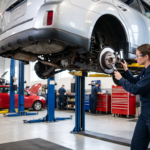
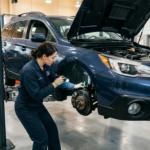
Modern disc brakes rely on floating calipers that slide smoothly on lubricated metal pins. When road salt and road grime penetrate worn rubber dust boots, the slide pins corrode and seize in place. When a caliper pin seizes, only the inner brake pad makes full contact with the rotor. This leads to rapid friction wear on one side, overheating rotors, and pulling toward one side during sudden stops.
Exposed Steel Brake Lines and Corrosion Vulnerability
Steel brake lines run along the underbody of your car, carrying brake fluid at immense pressure. Pitting corrosion eats away at exposed metal from the outside in. Automotive safety data and underbody brake line corrosion insights indicate that corroded lines can maintain pressure during gentle braking but catastrophically rupture under emergency pedal pressure. Thorough inspections identify weak spots before fluid leaks occur.
ABS Sensors and Rotor Glazing
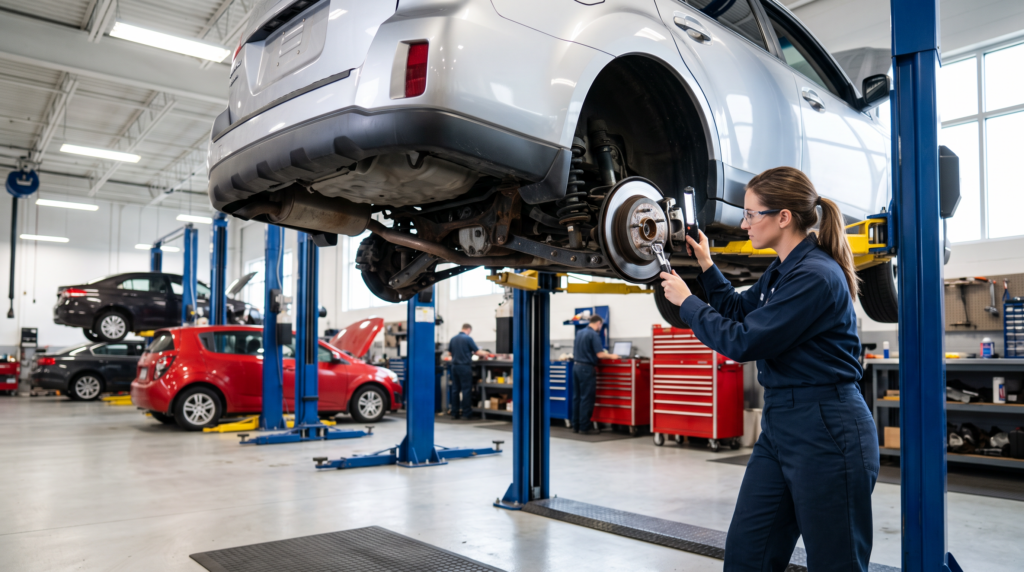
Anti-lock Braking Systems (ABS) depend on wheel speed sensors to detect loss of traction on slick roadways. Salt buildup, road dirt, and rust scale can foul these sensitive magnetic pickups, triggering warning lights and disabling stability control. Getting a complete brake service that includes cleaning, lubricating hardware, and testing sensors keeps your stopping distances short on wet asphalt.
Suspension and Steering: Navigating Potholes and Freeze-Thaw Pavement
Summer heat breaks down asphalt, and autumn moisture fills pavement cracks. As overnight temperatures dip below freezing, water expands, creating sharp potholes across Kenosha streets. Your vehicle’s suspension absorbs these impacts to keep your tires firmly planted on the road.
Shocks, Struts, and Ride Control
Shocks and struts do more than smooth out bumps; they maintain tire contact with the road surface. Worn struts allow excessive vehicle bounce, body roll around corners, and extended braking distances. If your car nosedives when applying the brakes or feels unsettled over railroad tracks, the damping units need replacement.
Ball Joints, Bushings, and Tie Rods
Steering responsiveness depends on precise connections between tie rod ends, control arms, and ball joints. Cracked rubber bushings allow road salt and moisture into ball sockets, washing away grease and accelerating metal-on-metal grinding. Loose suspension components cause uneven tire wear, steering wheel vibration, and wandering on highway commutes along I-94.
| Component | Common Warning Sign | Cold Weather Impact |
|---|---|---|
| Brake Pads & Rotors | Squealing, grinding, or pulsing pedal | Extended stopping distances on ice and snow |
| Shocks & Struts | Excessive bouncing, body roll, nosedive | Reduced tire traction on rough, frozen roads |
| Engine Coolant | Discolored fluid, slow cabin heat | Risk of frozen engine block and heater core failure |
| Tie Rods & Ball Joints | Clunking over bumps, loose steering feel | Loss of alignment and erratic directional control |
Essential Fluid Checks and Tune-Up Essentials for Autumn
Fluids are the lifeblood of your vehicle. While summer heat tests boiling points, autumn and winter demand proper viscosity and freezing resistance. Overlooking fluid maintenance leaves sensitive engine and drivetrain parts exposed to friction and thermal shock.
Cooling System Flush and Antifreeze Concentration
Engine coolant does not just prevent overheating in July; it prevents your radiator and engine block from freezing solid in January. Over years of operation, coolant additives break down, turning acidic and corroding water pump impellers and thermostat housings. A precision refractometer test checks freeze protection levels, ensuring the coolant mixture can withstand sub-zero conditions without gel formation.
Engine Oil and Spark Plug Health
Cold engine starts require rapid oil flow to lubricate camshafts, crankshaft bearings, and pistons within seconds of turning the ignition key. Switching to clean, manufacturer-specified oil ensures fast flow on cold mornings. Pairing an oil service with fresh spark plugs, clean air filters, and intake cleaning guarantees clean fuel combustion, smooth idling, and maximum fuel mileage.
Power Steering and Drivetrain Fluid Inspection
Stiff steering on freezing mornings often points to degraded power steering fluid or a failing pump. Inspecting differential, transmission, and transfer case fluids ensures smooth power delivery to all four wheels when traction is compromised.
Tailored Solutions: Matching Vehicle Care to Your Driving Needs
Every vehicle and driving routine requires a tailored maintenance approach. Choosing the right inspection scope depends on how you use your vehicle in Kenosha:
- Daily Highway Commuters: Vehicles traveling high daily mileage on I-94 or Highway 31 need priority inspections on wheel bearings, high-speed tire balance, and brake rotor runout.
- City and Short-Trip Drivers: Stop-and-go driving prevents engines and exhaust systems from reaching full operating temperature, accelerating condensation in motor oil and exhaust hangers. Frequent oil changes and battery health tests are critical.
- High-Mileage Family Vehicles: Vehicles with over 100,000 miles require detailed inspection of rubber suspension bushings, ball joints, coolant hoses, and drive belts to prevent sudden mechanical breakdown.
- Work Trucks and Utility Vehicles: Hauling heavy cargo places higher stress on rear suspension springs, shock absorbers, differential fluids, and heavy-duty braking components.
Why Choose Moreno Auto Service & Repair in Kenosha, WI
When you need dependable automotive care, having an honest, local technician makes all the difference. Located at 3102 22nd Avenue, Kenosha, WI 53140, Moreno Auto Service & Repair is a family-owned and operated repair shop committed to putting drivers first.
Our experienced technicians utilize advanced diagnostic equipment to pinpoint automotive problems accurately the first time—saving you unnecessary expense, time, and guesswork. Whether your car requires complex brake and ABS repairs, suspension and steering adjustments, engine diagnostics, exhaust repairs, tune-ups, or complete coolant flushes, we provide clear explanations and reliable workmanship.
We pride ourselves on transparent communication, welcoming customer service, and honest pricing. If you notice strange noises, soft brake pedals, or dashboard warning lights, our team is ready to inspect your vehicle and restore your peace of mind.
Frequently Asked Questions About Auto Repair in Kenosha WI
How do I know if my brakes need repair before winter?
Common warning signs include high-pitched squealing when applying pressure, grinding sounds from worn friction material, a spongy brake pedal, or the vehicle pulling toward one side. If your steering wheel vibrates during braking, your rotors may be warped or glazed.
Why is my car steering stiff on cold mornings?
Stiff steering in cold weather is usually caused by thickened or contaminated power steering fluid, a slipping accessory belt, or worn steering rack components. Flushing old fluid restores smooth, effortless steering response.
Can road salt damage my vehicle’s exhaust system?
Yes. Road salt clings to exhaust pipes, mufflers, and catalytic converters, causing metal corrosion and rusted mounting hangers. Inspecting the exhaust system prevents dangerous fumes from entering the cabin and stops rattling underneath.
How often should I have my vehicle’s alignment checked?
You should inspect your wheel alignment at least once a year or whenever you notice uneven tire wear, steering drift, or after hitting a severe pothole. Proper alignment improves handling safety and maximizes tire lifespan.
Protect Your Ride This Season: Schedule Your Inspection Today
Preparing your car for changing weather before temperatures plummet prevents expensive emergency repairs and keeps your family safe on Wisconsin roadways. Don’t wait for the first hard freeze to discover worn brakes, weak suspension parts, or low antifreeze protection.
Contact Moreno Auto Service & Repair today by calling 262-842-7041, or easily request an appointment online. Visit our shop at 3102 22nd Ave in Kenosha to experience honest, high-quality automotive care from a team that treats your vehicle like family.